Muir Of Ord


LOCATION: Candelo (Address TBA)
ABOUT THE GARDEN
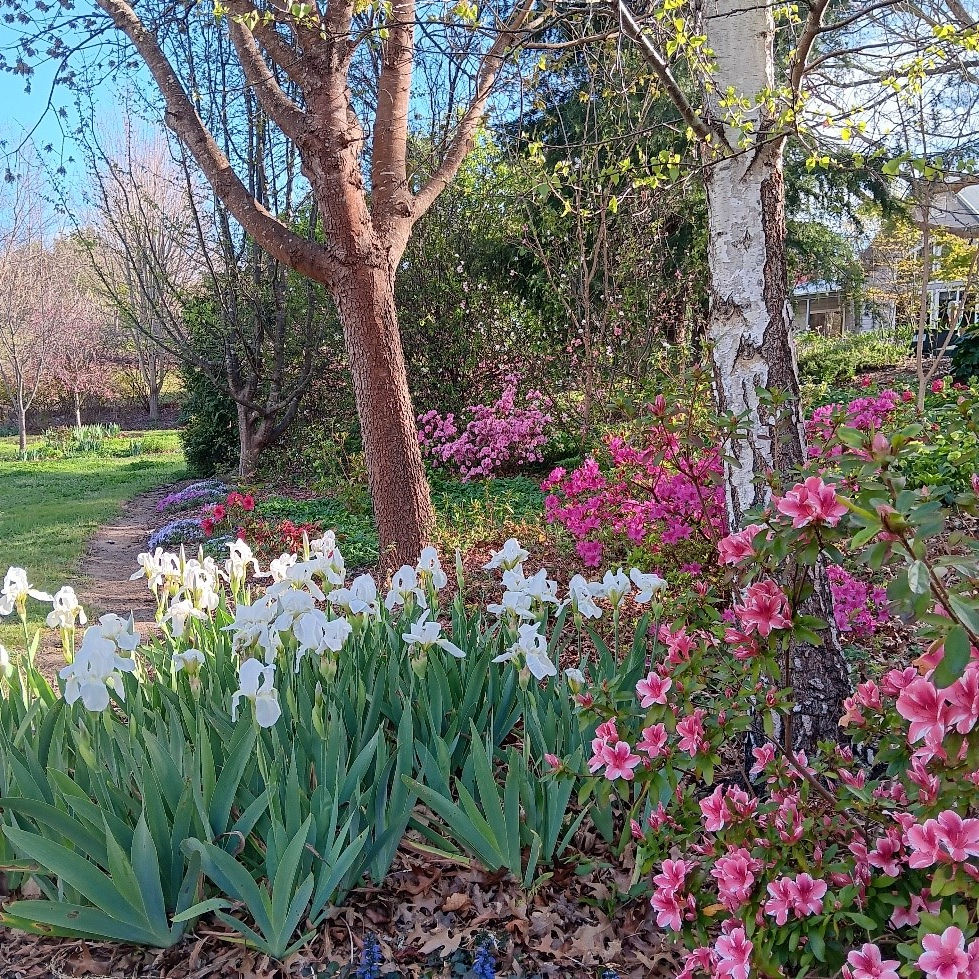
Muir of Ord is a semi formal garden owned by Dave and Cathy, located in a frosty valley just south of Candelo.
It’s a garden for all seasons. The main part of the garden is 17 years old. Before there was a garden there was just a paddock, although several larger trees date from before this time. The Claret Ash avenue dates from 2001 and the house from 2007; however, some newer sections of the garden are only about 2 years old, some even younger. The main apple orchard is about 14 years old. The garden’s name comes from a 1930’s farm owned by Dave’s grandfather which in turn drew its name from the original Muir of Ord, a village on the Black Isle to the west of Inverness in Scotland.
Winters can be cool to very cold here and it’s not unusual to have few nights down to -8 or colder each year. The choice of plants and layout of the garden reflects this starting point. In winter the garden is bare allowing sunlight to flood in, which extensive bulb plantings enjoy as things warm up. Spring is a mass of tree blossom. The large Malus purpurea crab apple to the west of the house is, we estimate, nearly 50 years old and when in bloom is a breathtaking sight for up to 3 weeks. In summer the garden transforms from sun to shade allowing species such as hellebores, azaleas (mollis and deciduous), epimediums and vancouveria to thrive. The sizeable Chinese Elm on the southern side of the house creates lovely shade on hot summer afternoons and is a great place to sit after a day outside. There are also plantings of roses and hardy perennials including Edgeworthia, valerian, flowering quinces, dwarf flowering almonds, Achillea, Kerria, Geranium and Iris. Highlights include the rare crab apple Malus Tschonoskii and an unusual and perhaps rarer Quercus Phelos. See if you can spot them!
KEY FEATURES
-
Heritage Apple Talk
-
There are approximately 2 acres of perennial beds interspersed with sweeping lawns under mature trees including many delightful flowering cherries (there are two different clones of Mt Fuji and a lovely row of Ukons facing the bottom lawn), crab apples and birch. The old stone shack is very much a work in progress but was an influence for the dry-stone walls you may notice scattered throughout the garden. There are several quiet places to just sit and enjoy the garden as well.
-
Of interest, the edges of all the gardens, inside and outside the yard, were originally cut by hand using only a spade. There’s almost one and a half kilometres of edging cut this way with more slowly being added each year. All the garden beds were initially mulched by hand too until they effectively became self-mulching. Yes, we seem to have done it the hard way! But it’s true that a garden is never really finished and therein lies the joy of gardening.
-
Autumn colour can be vivid. A strapping young Scarlet Oak combines beautifully with a large Freemanii Maple in autumn in the bottom garden, as do the Parotia’s, Birch and large Mt Fuji cherry on the northern side of the house.
-
In addition to the garden, there is a collection of approximately 175 varieties of ancient and heritage apple trees. The oldest variety can be traced to before c1200. Seasonally, select varieties are grafted onto semi-dwarfing root stock and are available for sale as bare rooted whips in winter. A stroll through the main orchard at any time is nice but during flowering and as the fruit matures is very enjoyable. We are keen about the old apple trees, their history, cultivation and flavours. So, if you’re interested, we’d be happy to talk to you about them.
ENTRY FEE
Single Garden $10 or All garden pass $30
Children under 16 are free
Cash only
No dogs allowed
GOOD TO KNOW
The garden is mostly flat or gently sloping. Only one small section of the garden would be considered ‘steep’ making the garden almost entirely accessible for people with moderate mobility issues.
Distance from Candelo Town - 3km
Market stalls
Facilities - No
Parking - Level easy access parking right next to the garden